What to Do with Your Wayward Adult Child – II
Ministries > Focus on the Family with Jim Daly

The dad of three adult daughters, Dr. Jim Burns, shares practical ways to navigate this new season of parenting, keeping the welcome mat out and the opinions to a minimum. You’ll learn about healthy boundaries, estrangement, and reconciliation with your wayward adult child
Guest (Female): ChatGPT and AI can offer you ideas and attempt to give you answers, but it can't listen with compassion, pray with you, or offer biblical wisdom. Real connection is what brings true hope. Focus on the Family offers a free confidential consultation with a Christian counselor to guide you and help you find hope with whatever you're facing. Go to focusonthefamily.com/gethelp or call 1-800-A-FAMILY. That's 1-800, the letter A, the word family.
John Fuller: The following program is sponsored by Focus on the Family and is supported by the prayers and financial gifts of wonderful friends like you. This is John Fuller, and please remember to let us know how you're listening to these programs on a podcast, app, or website.
Jim Burns: You can still find something to say, "I'm sorry" for. You know what? I'm sorry you feel that way. I really want to hear from you what you believe about this because I want to be a better person and I actually want our relationship to work. That goes against the grain of saying, "You need to clean it up. You need to fix it," because when we do that, that's actually just moving them away from us as opposed to moving them toward us in a safe manner. We want to be that safe parent. You can be safe by being authentic.
John Fuller: That's Jim Burns, and he shared last time here about navigating the joyful, sometimes heart-wrenching role of parenting adult children. Thanks for being with us here on Focus on the Family with Jim Daly. I'm John Fuller.
Jim Daly: More and more parents are facing a reality that they never expected, and that is their adult son or daughter is questioning or maybe even walking away from the Christian faith that they were raised in. It becomes such a disappointing burden for the parents, like, what did we do wrong? How did we not communicate effectively? If we did our job right, I'm sure the Lord would have done His job right. So where is the breakdown? And you know what? It often is right there in this little thing called free will. God was a parent, Adam and Eve, and look what His kids did. We're all part of that connection of a sin-filled world. So the point is, we can do everything well. We're never going to do it perfectly, but kids have their choices. Teens make choices. Adults, our children in their 20s make choices that we might see as harmful, but they don't see it the way we see it. Today, we want to continue the discussion with Jim Burns. If you missed last time, get the app so you can download it and get access to all the programs, but especially the discussion yesterday so you can catch up, or you can go to the website and do that from the focusonthefamily.com website. All in all, we're here to help you. We've got counselors. We've got so much help and we want to continue this discussion for parents of adult children.
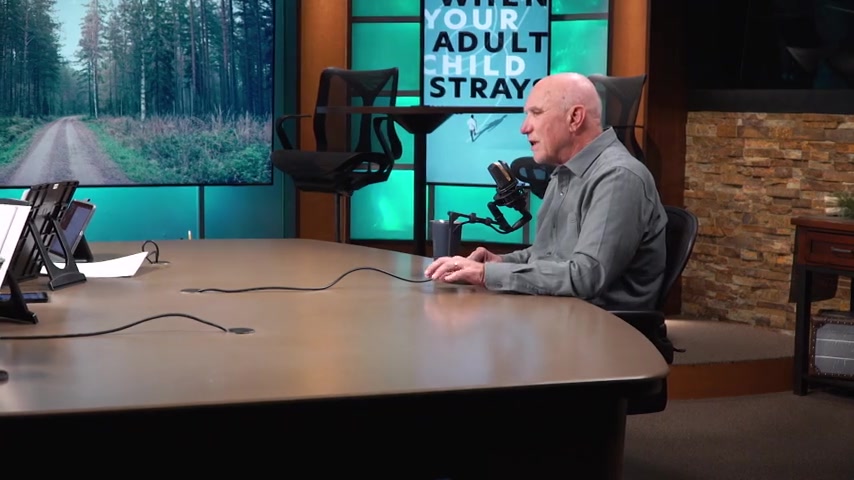
John Fuller: Jim Burns is the founder of HomeWord, a ministry that has been equipping parents for a long, long time. He's really got an authentic and approachable way that I think really connects with people. Jim has captured his thoughts about this topic in a terrific book, *When Your Adult Child Strays: Trading Heartache for Hope*, and we'll encourage you to get a copy of that from us.
Jim Daly: Jim, welcome back.
Jim Burns: Great to be back with you all.
Jim Daly: Continuing the chat, and it was so good. Many of us are living in this and it's become one of the dominant questions that we receive online or through phone calls to the counseling team. My 20-something is doing this and filling in the blank. It's all over the board. It's sexual issues, it's decisions to live together. Parents, to that opening I mentioned, we wear that pretty roughly because what did we do wrong? What happened here? Respond to that.
Jim Burns: Well, we play the "should" game. We should have done this, we should have done that. I know Cathy and I did that. Our kids bumped in college. They didn't take the major step that we even talk about in this particular book we're talking on today, but when they did it, we took the blame as if only we would have done something differently. I think too many parents do that. I think too many parents play that "I should have done this" when we're not in control. That's where we have to relinquish our kids to God. That's a hard thing to do.
Jim Daly: If you were to describe the parent's prototype that you see are most successful, what do those parents look like? What are their attitudes? You've seen these over the years, these parents that now have 20, 30-something kids and they're generally healthy. What are the attributes of those parents that you've seen?
Jim Burns: I actually don't think they know they've done this, but this is what they've done. In those first two years, they've kind of catered to them and they've just loved on their kids. Then they controlled them for protection until about 10. Then they moved to coaching, where coaches are still in charge, but they started to let the kids make some decisions. They became consultants from 15 to 18. In consulting, most of those day-to-day decisions were done by the kids, and they embraced that. You know how many weeks that is? 936 weeks from the time they're born until the time they become an adult. That sounds so finite. 936 weeks. Go! That's it, right. But these were ones who prepared. The ones who didn't prepare for this, they were still in control. They were telling their kid what to wear at 18. But the point that I'm saying here is that it's those parents that allowed and then they bought into the fact that their kids were now adults even though they didn't act like adults and they didn't always make good adult decisions, but they were going to treat them—they had moved from a parent-child relationship to a parent-adult child and that's a big difference.
Jim Daly: But listen, a lot of young people in their 20s especially right now are re-examining what they believe. So often we've had conversations with experts talking about deconstructing the Christian faith. So they get it down and they disavow it because they deconstruct it. Then there's others that are actually in the process of making the faith their own. Parents need to allow that. John Lennox, the great mathematician at Oxford now retired, but a tremendous thinker, he said the best thing that my mother and father did for me was to allow me to read books. This is like at 13, 14. Karl Marx. They said, "No, read it. You need to know about it." Not to be intimidated by it. But you know, John Lennox is a brilliant man. He became the head of mathematics at Oxford. But he said his parents willingly and wanted him to be familiar with things and then they would challenge it at the dinner table. "Now tell me what you learned about communism." Those kinds of thoughts. Speak to that.
Jim Burns: What I love about him is that he did that when the kids were still in the home. What we do is we sometimes don't do it that way. We won't let them have a doubt, we won't let them have a struggle or share a struggle, or we won't let them read a book that goes against something. Then they get away to college or they go into the workforce or whatever, they're killed because they've never even heard this stuff. So I think the best thing we can do is teach them to become critical thinkers at even a young age. I'm saying my little 10-year-old grandson, I'm beginning the process as Grandpa to help him think critically about something. What I'll do on that is he'll tell me something that the kids are doing at school and I go, "What do you think about that?" Now at this point, I haven't read communist books to him, but I think I'm a lot safer to have him read some of that stuff under my wings than what he's going to get when he goes away to school. In a course, his example is just that what he perceived out of that is that my father didn't fear those things in his faith. That's a great thing to communicate.
Jim Daly: It's a great thing. And with our faith, we shouldn't fear a lot of the stuff—we're so fearful. Our God is bigger than any of this stuff. It's so true. You have a story about Christie, your daughter, which illustrates this difference between rejecting faith and forming an independent faith. So what was her story?
Jim Burns: Her senior year, she wrote a column, and the column in the school newspaper said, "I had to disown my parents' faith to own my own faith." I'll tell you, I still get chills thinking about that because I was like, oh my gosh, Christie's going to blow it and she's going to do all this stuff. It was the best thing. She deconstructed in a positive way. Too much of her faith was really the faith of Mom and Dad. Again, we did Bible studies at home and we prayed together and we did all these kind of things. So in a sense, she had to kind of disown us in the faith department to own her own. Now guess what? We go to the same church, the fruit doesn't fall far from the tree, but she does have a faith that's her own now and it's a strong faith and the things she reads are a little different than the things I read.
Jim Daly: And even in that description, what we're saying is don't yank the chain so quickly. Don't be fearful to allow them to wonder about the world around them.
Jim Burns: When you look at faith formation, Jim, one of the aspects of growing in faith formation is that you can actually live in a world that you don't understand everything about. I mean, I always will laugh and just say, "Well, I don't know, I'll have to ask God when I get to heaven because I have no idea." That's actually a stronger thing than buttoning it down for our kids. So we found that with Christie going through this time of searching that yeah, it was deconstruction. That's when deconstruction can be good. As a parent of adult children, one of the things we—well, the whole journey, they know you better than anybody. Your spouse knows you best, then your kids are going to know you. I think in that context, how do we live up to the reality that we're not perfect and we're going to try hard, we're going to try to live a Christian faith very well, but we're going to blow it? I'm going to say things that you're scratching your head to my son or my daughter. Speak to the healthy nature of that because we're all sinners full of sin and we're saved by grace.
Jim Burns: Well, I think it's a very healthy thing and I actually write and talk a lot about it with people, with parents of adults, is that sometimes we have to embrace "I'm sorry." To say, "You know what? I—that was all about me and that wasn't about you and I got stuff going on at work or your mom and I are feeling some pressure here and so I blew it. I was out of line on that conversation or I did this or I did that." I think sometimes we just have to admit—we admit our sinfulness. I mean, you can say, "I'm a sinner and I'm saved by grace," sure. But sometimes we just have to simply say to them, "I'm sorry," and lead with the "I'm sorry" and be sincere. Again, you can't lead—let's say you're in estrangement and they're saying it's all about you. Well, and you don't think it is. You think it's kind of about them too. You can still find something to say "I'm sorry" for. You know what? I'm sorry you feel that way. I really want to hear from you what you believe about this because I want to be a better person and I actually want our relationship to work. That goes against the grain of saying, "You need to clean it up. You need to fix it," because when we do that, that's actually just moving them away from us as opposed to moving them toward us in a safe manner. We want to be that safe parent. You can be safe by being authentic.
John Fuller: Jim Burns is our guest today on Focus on the Family with Jim Daly, and we're talking about one of the most requested topics that we have here at Focus on the Family. *When Your Adult Child Strays* is the name of Jim's book, *Trading Heartache for Hope*. Get a copy of the book from us here at the ministry. It's a phone call away: 800, the letter A, and the word family, or stop by focusonthefamily.com/broadcast.
Jim Daly: Jim, as we do this kind of work with our adult kids, sometimes they make decisions that upset one parent but not necessarily the other. And so there have been frictions in some marriages I know regarding adult kids of ours. And so how do we navigate that? How do we stay on the same team? Because it's really critical that we don't let that child get in the way of our relationship.
Jim Burns: First of all, you're going to have to accept, because this is just parenting 101, that we're not going to agree on everything. I think when they get older and we don't agree, it's harder. I would say most of Cathy's and my strongest intense discussions—how's that for not saying arguments? Right, right. Well, but I would say it's over our kids still. Cathy and I do have a different way. I have this book on *Doing Life with Your Adult Children* and the second approach is unsolicited advice is taken as criticism. Cathy will sometimes say, "You need to work on principle number two right now because I'm giving advice and it sounds like criticism, right?" So that's where I think as a couple we have to—what do we agree on? I mean, for Cathy and me, we probably agree on 85%, but it's that 15% that drives us knots. There are times when I just have to say, "You know what? I'm going to let Cathy do her thing a little different than I'm going to do." There's times when she has to say that to me. But if people can't get on the same page, then that's where I think we need a moderator. I think we come in and there's great Christian coaches out there, there's some great Christian counseling. I actually think that this is a stage that very few of us can get through without the help of other people. So we have a couple, Terry and Sharon. They've raised their kids, their kids are not perfect, they are amazing people. We meet with them about six times a year and I have a little notice in my pocket where I have about five questions I want to ask them and that's where we get some of our counsel. Now, he's a health executive, he's not a therapist, he's not a pastor—he should be, he was the chairman of an elder board at a church. But they have helped us big time. And sometimes they'll just say, "No, we don't see eye to eye on that one either." And then rest in it. I think you have to figure it out. So it almost goes back to what I was talking about in terms of our own self. I find that I do better with Cathy if we're at odds over one of the children's decisions or how they're raising their kids or oh my gosh, tons of—you're touching all the hot buttons. I know, I know. And we have them. So what I'm better when we go on date night and look into each other's eyes and recommit our relationship. When we really do put the discipline into making sure that our marriage is not—we haven't buried this stuff under the mat. So it's funny because it almost goes opposite to it. I don't have to convince her that I'm right. She doesn't have to convince me that she's right. How do you live with the fact that you're going to disagree? Our spouses are humans and they are smarter than us sometimes and they're sinners and all this. So we live with that complication. That's the nature of it. We can't expect always to be on the same page, but try to get on as much as you can.
Jim Daly: Jim, I wanted to bring this up, I think last time we spoke on this yesterday, but the issue of anxiety and maybe even tipping into depression. I think the CDC said 15 to 25-year-olds, at least one report that I read from the CDC said that that community—it's about 14 million, I think, that are in that demographic, 15 to 25—50% are experiencing anxiety and/or depression. That's a whole different parenting issue that crops up given what we're talking about. You have to now have that capacity as a parent to work with a child, maybe as high as 50% in that age group, 15 to 25, that are dealing with that. How do we go about discerning it, understanding it, and helping?
Jim Burns: I'm really glad you brought it up. I believe you're right, and it's the largest demographic right now of that age group we've ever had. So yeah, a lot of depression, a lot of anxiety. We can talk about social media from them being raised, we can talk about all these other things, but as a parent, you're not a psychologist. Most parents aren't psychologists. You have psychologists who listen to the broadcast, and fine, but it's their kid. So it's a different ballgame. So I think we need to become people who understand—how do you help someone who's going through anxiety and depression? But I don't think you sit them down at the table and say, "So you're depressed. What's wrong with you is you're depressed." I don't think we do that. I think we have to learn how do you treat a person who might be depressed? How do you treat a person who's going through really some extreme anxiety? The harder part is you've got kids today who are in that age bracket, the 15 to 25. You've got kids in that bracket that they could be clinically depressed. That's a different kind of depression and anxiety than the kind of depression anxiety that's just going on because they're going through so many transitions and so many changes. So if you believe that your adult child is going through some type of deeper anxiety or depression, then that's when I think you bring in the experts. As a family, don't just put them in, but say, "Hey, as a family, we want to talk about all the things that are going on." There are some great books and there's obviously you guys have broadcasts on this. There's a lot of great things to learn on it. But my mom didn't have to ever look up social media. I mean, we just had the phone with a long cord and she was always mad at me because I'd take it into my bedroom. Well, today, she didn't have to learn this stuff. Today, we have to learn if our child is feeling anxiety or depression, we have to learn about that and how do we help them. But don't be the armchair psychologist. You were not made that. You're mom and you're dad. Get the help you need.
Jim Daly: And that's good. Act on those observations too. I think that's another thing. Be aware of it. And a lot of parents aren't aware. What the kids are doing is they're depressed and anxious and the parents think that they're just behavior problems. So you've got to be able to discern that much. Jim, we've talked about this idea of loving your child regardless and being there, being the backstop regardless of behavioral issues. But let's move that to the 20-something, maybe even 30-something, where that relationship is toxic. It's that dark, it's no longer that easy, if I could put it that way. And people can fill in the blanks as to what they might be dealing with, but there's accusations, there's just severe negative energy going on in the relationship. How do we as parents deal with that kind of toxic relationship and put boundaries around it, maybe to protect our spouses or other children that are still in the home? What is that approach?
Jim Burns: Well, I think there's lots of ways we can go, but one is you mentioned the word boundaries. I think it's important that we understand that we do need to put boundaries in. If something is toxic, then we put boundaries into it. And we can say, "You know what, honey? We love you so much, but right now this kind of behavior isn't going to be welcome in the home. Can we take you out on a regular basis and go get coffee, just us two, but we don't want this in the house with the other kids?" or whatever it might be. So here's some of our boundaries, here's some of our expectations. Can you live with that? And if they can't live with that, then say, "Okay, fine," and keep in the relationship but you're going to have to lower the expectations and whatnot for a while, and perhaps some of the contact time too. And that's a boundary. Right, it's not estrangement, it's just lowering the expectations, lowering the boundaries. I think at the same time when it gets super toxic, there's an elephant in the room. So mention the elephant and just—if you can with your adult child, say, "What's going on?" Now again, if it's drug and alcohol abuse on their part or it's some really immoral crazy behavior, whatever, that's different than if it's just going crazy on the attitude thing. So you want to know what it is. A lot of people who are in estrangement and toxic relationships say they don't know why their child is acting this way toward them. So if you can find that out by just simply saying, "What's going on?" Don't do that in the heat of the battle and don't try to change your child. The mistake we make is we go as I said, "You're wrong and I'm right." No, I think we have to say, "Help me understand how you feel." And I know that sounds like a therapist, but I mean, help me understand how you feel. What's going on? And then we have to bite our tongue. It's not the time for us to go and get defensive. So a parent has to take the lead and a lot of that is biting the tongue.
Jim Daly: Yeah. What you're describing, though, is kind of a parental curiosity. Which is a good posture to be in at that point, rather than being referee, judge, whatever descriptor you have. Ask good questions to find out where the angst is. You know, one of the things I've found with even people that do not appreciate Christianity, they've had a bad experience and often those that are most hostile to the faith are people that had terrible situations growing up or something like that. "My parents were the worst hypocrites." You get this and it formulates in them this angst toward a Christian. They don't even know you. And yet when I've sat with them and broken the caricature or the stereotype and you know, we sit and we talk and they're going, "You're not like the Christians I know." And it's unfortunate because we all should be—they should be saying, "You're like every other Christian I know. Why do you love me? Why do you care about me?" But when you project concern for people and interest in people, and this would include your adult children, something in the human heart opens up even for the crusty soul.
Jim Burns: Exactly. I had a guy who was in our home. We had had a birthday party for him. We did not have the same view on sexuality. And he told me his story and it was a horrible story. His parents were goofy when it came to the faith and whatnot. I mean, just really goofy. Destructive. Yeah. I was trying to be nicer. But they were and for some reason I started to well up with tears and I just said, "I'm so sorry." And he looked at me like, "Why are you sorry?" And I said, "Because something that's so near and dear to me and so important to me, I kind of feel like you got a raw deal." And I'm sure that he did some goofy stuff where his parents could come down on him, but his parents didn't do a good job. What he needed to see at that point was the us showing love and care to him, not trying to fix him for his weird thoughts on—very different thoughts than us on his sexuality.
Jim Daly: Your dad, you put some boundaries around your dad. Was that like, "Give me the car keys because you can't drive," or what were those boundaries?
Jim Burns: He took the car keys the first day because I hit a trash can the very first day I got my license. Oh, I just think in when you were older, but you're 20-something and no, my dad was an alcoholic and my grandpa on my mom's side was an alcoholic. So our dysfunction in our family was alcoholism. For example, Dad, I love my dad. Dad was one of these guys who some people don't like to use the term functioning alcoholic, but he was. He was good in business, he did things, he came to my games. He wasn't a horrible person. But as he started drinking, I never let my kids drive with him. And I didn't even say that to him. I just kind of go, "Oh, we're going to do this." I never let them stay there because I was afraid that one day Grandpa would take them someplace. Some unspoken boundaries, some spoken boundaries. And the spoken boundaries never went well. And so we did that, but I still tried to stay in the story with Dad and we did lots of things and I'd visit him all the time and did all these things. One day he was in a motor home, his motor home with my mom, and he almost crashed the motor home. And I got him to go to an alcoholic drug rehab center at 68 years old. The other guys were like in their 20s, right? And he was the Pied Piper and Dad never drank again and Dad pulled it together. And so some of those boundaries I was then able to break away from over the years. And we ended up with a really cool relationship. Now I'm not saying Dad was perfect, but Dad in his sobriety, he made a lot better decisions. That's a hard one because whenever you deal with adult children, a lot of times as your children are getting older, so are your parents. I had the blessing of having my dad become a Christian. My mom had died. Having my dad become a Christian, being a—almost a fellowship type relationship with him. I never dreamed that was going to happen. And I literally did have to set some boundaries that I was not really happy about and always kind of felt guilty about too.
Jim Daly: Jim, right at the end here, I want to end with that positive story out of your book about your friend Ron, who beach trips with his son, discussions—describe that because it I think it knits together everything we've talked about.
Jim Burns: It really—you know what? It does. I hadn't thought about that for a long time. Ron had a lot of tension with his son. His son didn't—he violated his values and he strayed from faith and he did all these things. Ron was the type of guy that said, "Sit down"—he's kind of a man's man—"sit down, I'm going to tell you what is going on and you need to pull this together." That didn't work and it only broke their relationship. So Ron decided to go on a week trip. Ron surfed, fished, and they brought bikes, and so they just did three things that both he and his son liked to do. And they vacationed together. And they had laughter and they went out to dinner and they ate—I think they had Mexican food every night because the son likes Mexican food. Kind of toward the end, the son said, "Dad, this has been the greatest time I've ever had with you and it's been so good. And I know you have questions and I know you have—and I'm going to be okay. I—you know what? I know you're worried about me and yeah, I've made some dumb decisions and I'm probably in agreement with most of those that you would say are dumb. But I'm coming back. And I just want you to know this has helped me so much to make the turn because I know you love me and I know every night you'd want to tell me how wrong I was on certain things and you never did. And I just want to thank you for that." And today, by the way, this is an ongoing story. Today, Ron and his son are in business together and it's a kind of almost a Christian business and they do so many great things as family. So it started out pretty bumpy, but Ron swallowed his pride and said, "I'm going to build this relationship on the long haul."
Jim Daly: Well, that's exactly what we want to end on is the longer arc that you mentioned throughout the program and the idea that in your 20s, you're going to experience some things that may be displeasing to Mom and Dad and we get it and that's okay. But look at that long arc and like the outcome of Ron and his son, that's what you're aiming for. And that was a beautiful way to end. Thank you, Jim. Thanks for being with us.
Jim Burns: Always great to be with you.
Jim Daly: And like we often do, just make a gift of any amount, monthly or a one-time gift, and we'll send you Jim's book, *When Your Adult Child Strays: Trading Heartache for Hope*, as our way saying thanks for jumping in, getting a great resource that you can apply right now, and then helping other families to get those resources as well.
John Fuller: And part of that package of resources is our counseling team. You can call and schedule a free over-the-phone consultation with one of our caring Christian counselors because of our donor community and their generosity. So donate today, contact us if you need to connect with one of those counselors and our number is 1-800, the letter A, and the word family, or you'll find details at focusonthefamily.com/broadcast. Coming up next time, Christian financial advisor Russ Crosson will be answering questions about finances, like how can I honor God with my money?
Russ Crosson: So I can put it in retirement, I can put it in another piece of real estate, I can buy a second home, I can you fill in the blank, but I could also invest in my family. And that's been a paradigm shift for me.
John Fuller: Thanks for joining us today for Focus on the Family with Jim Daly. I'm John Fuller inviting you back as we once more help you and your family thrive in Christ.
Related Episodes
What to Do with Your Wayward Adult Child – I
Wednesday, August 26
Teaching Our Children What Makes America Great
Tuesday, August 25
Transform Your Marriage by Understanding Your Love Style
Monday, August 24
Related Videos


About Focus on the Family
We want to help your family thrive! The Focus on the Family program offers real-life, Bible-based insights for everyday families. Help for marriage and parenting from families who are in the trenches with you. Focus on the Family is hosted by Jim Daly and John Fuller.About Jim Daly
Jim Daly
Jim Daly is President of Focus on the Family. His personal story from orphan to head of an international Christian organization dedicated to helping families thrive demonstrates — as he says — "that no matter how torn up the road has already been, or how pothole-infested it may look ahead, nothing — nothing — is impossible for God."
Daly is author of two books, Finding Home and Stronger. He is also a regular panelist for The Washington Post/Newsweek blog “On Faith.”
Keep up with Daly at www.JimDalyBlog.com.
John Fuller
John Fuller is vice president of Focus on the Family's Audio and New Media division, leading the team that creates and produces more than a dozen different audio programs.
John joined Focus on the Family in 1991 and began co-hosting the daily Focus on the Family radio program in 2001.
John also serves on the board of the National Religious Broadcasters.
Contact Focus on the Family with Jim Daly
Mailing Address
Focus on the Family
8605 Explorer Dr.
Colorado Springs, CO
80920-1051
Toll-free Number
(800) A-FAMILY (232-6459)

